Posts

Greening The Building Sector: A Huge Investment Opportunity

Image
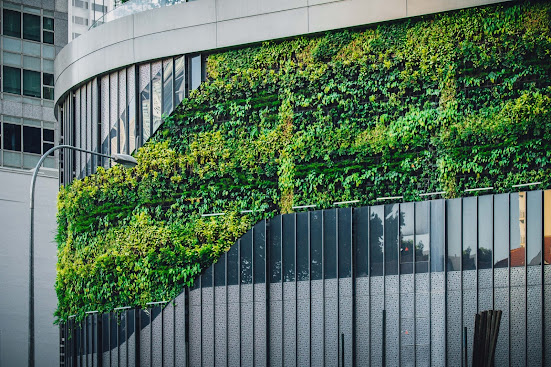
  A  green building  is a built structure that has used energy efficient, environmental techniques during its construction and operational phases. The term green building is also used to describe the process of designing, building and operating a built structure or a man-made micro-environment.  Both terms make parts of the broader process of Green Architecture, which is the philosophy rooted in designing a built structure that is responsive to the climate of its site, taking into account climatic considerations in order to provide its occupants a comfortable built environment without stressing natural resources. What is the need for Green Buildings? Building operations and construction accounted for about  38% of global emissions , according to UNEP’s 2020 Global Status Report for Building and Construction. Operations of a building accounted for 28% of the  global emissions while the allied industries such as cement glass, added another 10%.  UNEP’s r...

Pathway to decarbonization – Humanity’s biggest challenge and opportunity

Image
  The Paris Agreement seeks to limit the negative impacts of global warming. Its goal is to keep the increase in global average temperature well below 2 degrees Celsius above pre-industrial levels, along with pursuing efforts to limit the increase to 1.5 degrees Celsius (2.7 degrees Fahrenheit). The signatories committed to eliminating global net carbon dioxide emissions in the second half of the 21st century. The Antarctic ice sheet is much less likely to become unstable and cause dramatic sea-level rise in upcoming centuries if the world follows policies that keep global warming below the set targets. Implementation of the Paris Agreement requires economic and social transformation, based on the best available science.  "Putting sectors on net-zero pathways requires not only investing in new green technologies but also proactively phasing out carbon-intensive assets, and addressing the impacts of that transition on workers and communities." Businesses remain at risk due to...

Reducing ESG Window Dressing: The Role Of Regulators In Preventing Greenwashing

Image
Growing concerns around sustainability and climate change amongst all stakeholders, coupled with stakeholder demand for material information to appropriately identify, understand and mitigate ESG risks have led to the proliferation of ESG disclosures and reporting frameworks. International regulations including the Task Force on Climate-related Finance Disclosures (TCFD), or the International Integrated Reporting (IR) and global initiatives such as the EU Taxonomy, have emerged in the past few years. Increasing pressure on companies and investors to adopt these frameworks has accelerated non-financial reporting and disclosures globally, with reportedly 90% of S&P 500’s companies reporting on ESG or climate. These developments represent a global ESG ecosystem with, not only non-financial reporting and disclosure best practices and voluntary reporting frameworks, but also competition on ESG performance and metrics leading to ESG ratings and rankings on global indices, such as the on...

Scaling Energy Investments In Fragile States Can Light Up Millions

Image
The COVID-19 pandemic has highlighted the interconnectedness of global economies and the importance of digital connectivity, dependent on electricity. Energy access has catalytic potential for facilitating learning and education, job creation, healthcare and peace and stability so that fragile states are not left behind. Yet 800 million people around the world lack access to electricity. The plummeting of renewable energy prices is a strong appeal to the developed world, aid organisations, DFIs, and the private sector to break the cycle of poverty and provide the 800 million residents of fragile states with affordable electricity.  In Sierra Leone, for example, 75% of the population lacks access to electricity and only 2% of the rural population receives intermittent electricity. This said, investments in electricity expansion and investments in cost-effective solutions are lagging. A 2014 UNCTAD report showed that out of the US $5-7 trillion needed to finance the SDG, there ex...

Natural Climate Solutions Are The Key To Restoring Our Earth

Image
  The “Restore Our Earth” 2021 Earth Day theme serves as yet another reminder of devastating effects of industrialisation, deforestation and pollution (among many others) on our planet. It is a clarion call for urgent action that goes beyond mitigation and adaptation measures, but rather restorative interventions that focus on natural processes, green technologies and innovative thinking. The theme also dispels the myth that climate action should only focus on mitigation and adaptation to address climate change, but instead urges consideration of action and interventions beyond these measures.  "Natural-based solutions are palpable measures that can help in reducing carbon emissions, preventing coastal storms, sea-level rise, inland flooding and extreme heat." But what kind of natural processes or interventions can be used to address the myriad effects of climate change? The International Union for Conservation of Nature (IUCN), the World Bank Group and the World Resources In...

Rising Importance of ‘S’ in ESG for Private Capital

Image
Social issues are now among the most pressing concerns globally, be it challenges in poor and vulnerable households, unemployment, lack of support and incentives for companies to retain their staff, or hindrance in liquidity provisions to small and medium businesses that employ millions.  Now, at the forefront, these issues are not just values-based but have become material business ones, and the COVID crisis has only elevated this theme. "ESG integration becomes imperative in the capital markets as ‘S’ factors can help investors to understand how employers deal with contract workers, whether they have a strong work from home policy, or if they cut employees loose or pay them during disasters." The focus of non-financial factors, like ESG, has historically been on governance and environmental metrics, but COVID-19 has highlighted the importance of social risk management for a business’ social license to operate along with the fact that it needs to be integrated into its wi...

Reorienting Organisational Strategies Towards An ESG-Integrated Financial System

Image
It comes with little surprise that demand for ESG-integrated systems is growing. Frameworks such as the EU taxonomy not only help investors, companies, issuers and project promoters steer action towards a low-carbon, resilient and resource-efficient economy. They establish a performance threshold for economic activity that; Contributes to 1 of the 6 environmental objectives, i.e., climate change mitigation, climate change adaptation, sustainable use and protection of water and marine resources, transition to a circular economy, pollution prevention and control, and the protection and restoration of biodiversity and ecosystem s, Do no significant harm to the other five, and Meet minimum safeguards (such as, OECD Guidelines on Multinational Enterprises, or the UN Guiding Principles on Business and Human Rights) According to a recent Harvard Law School Forum,  the EU taxonomy has had a ripple effect on the US financial sector, given that regardless of the lack of a similar regulatory ...